 Wrist
How often to replace running shoes: what the makers say

Most makers that publish a number put a running shoe's life at 300 to 500 miles. Brooks' support article says performance running shoes typically last 300 to 500 miles, or 4 to 6 months of regular use. ASICS' advice page says 400 to 500 miles. Nike's guide repeats 300 to 500, and COROS says the same for daily trainers. This note puts those figures side by side, shows how to convert them into months for your own mileage, and lists the wear signs the makers tell you to check. Everything here comes from maker pages read on October 21, 2026; nothing was run or worn by us.
Start with the mileage range the makers publish
The figures cluster tightly, but they come from pages of different ages and regions. Here they are as published, with the date or region of each page:
- Brooks (US support article, read October 21, 2026): performance running shoes typically last 300 to 500 miles, and 4 to 6 months of regular use is the typical lifespan
- ASICS (UK English advice page dated October 6, 2021; the US address returned an error): consider changing running shoes every 400 to 500 miles
- Nike (US article, last updated November 4, 2021): experts generally advise new running shoes every 300 to 500 miles, and a 2011 research review suggested high-quality shoes can last more than 600 miles
- COROS (guide dated November 7, 2024): a daily trainer or non-plated shoe is known to last 300 to 500 miles; for carbon-plated racers, some studies show energy return falling beyond 200 miles
Two things stand out. ASICS' lower bound is 100 miles higher than the others, and only COROS separates daily trainers from plated racing shoes. None of the four gives a figure for a specific model.
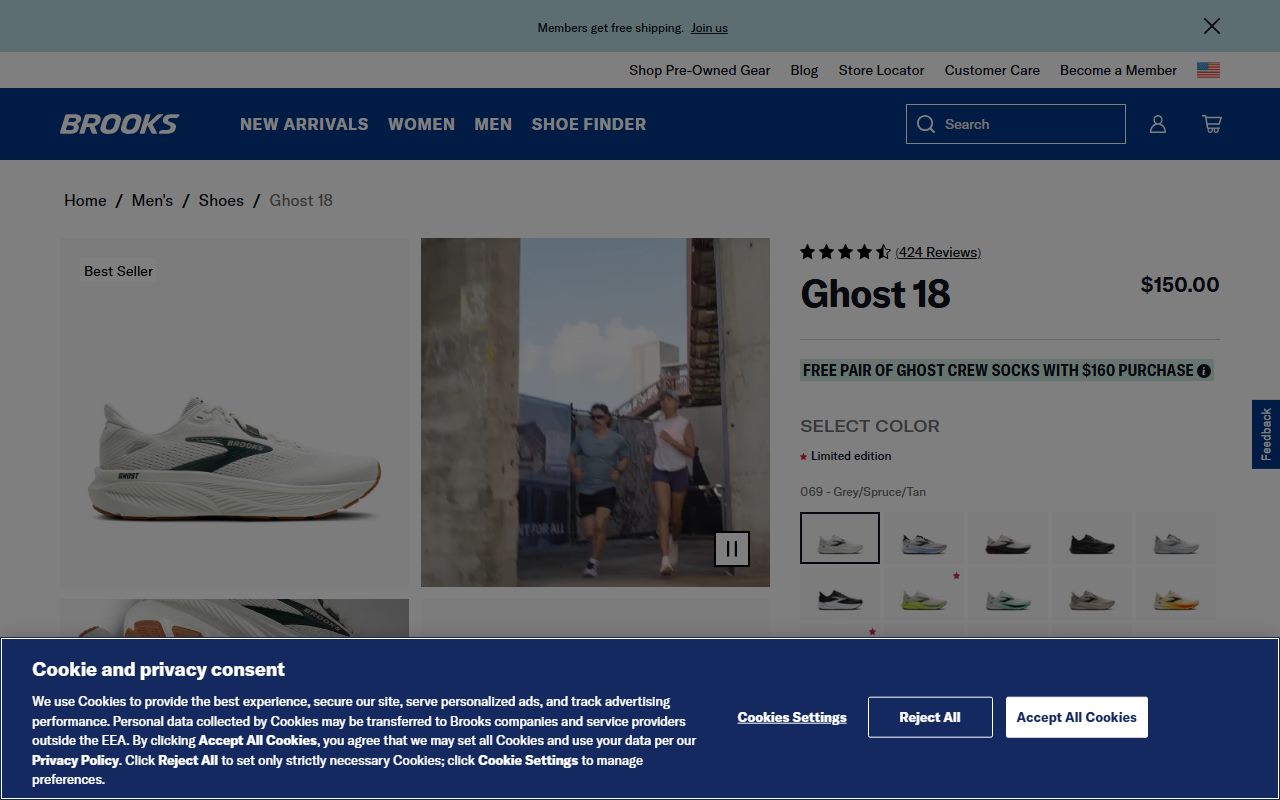
That last point matters when you read a product page. The Brooks Ghost 18, Hoka Clifton 11, ASICS GEL-NIMBUS 28 and New Balance 1080v15 pages we read in October 2026 print weight and drop, but no durability figure.
The ranges above are the only maker numbers you will get, so treat them as a starting estimate rather than a model rating.
Convert the range to months using your weekly mileage
A mileage range only becomes useful when you divide it by your own weekly distance. Nike's article does this for four kinds of runner, and calls the result a very general guide:
- Up to 10 miles a week: replace every 7.5 to 12.5 months
- Up to 15 miles a week, training for a 5K or 10K: every 5 to 8 months
- 20 or more miles a week, half marathon training: every 4 to 6 months
- 40 or more miles a week, marathon training: every 2 to 3 months
The arithmetic is simple enough to do yourself. At 15 miles a week, 300 miles arrives in 20 weeks and 500 miles in about 33 weeks, by our calculation. At ASICS' 400 to 500 miles, the same runner gets roughly 27 to 33 weeks.
Brooks adds a calendar backstop: 4 to 6 months of regular use, even if you do not track mileage. Whichever limit you reach first is the one to act on.
New runners building up slowly will sit at the long end of Nike's table. Our guide to daily trainers for new runners assumes exactly that kind of gradual mileage.
Count walking and work wear, not just runs
The miles that wear a shoe out are not only running miles. Brooks' support article says that using a running shoe as a daily walking or work shoe puts consistent, sustained pressure on the mesh and cushioning, which can break the materials down faster.
Nike makes the same point from the other side: one of its tips for extending shoe life is to wear running shoes only for running.
If your trainers double as office or errand shoes, assume you will reach the end of the range sooner than your running log suggests.
Body weight and surface matter too. Nike lists heavier runners, hard surfaces such as pavement and concrete, and extreme heat or cold as factors that wear shoes faster. ASICS lists the terrain you run on, your running style and your build.
Check the shoe for the wear signs makers list
Mileage is an estimate; the shoe itself is evidence. Between them, Brooks, ASICS and Nike name these signs:
- Outsole: smooth, worn-down tread (Brooks), or rubber worn through so the softer foam shows (ASICS)
- Midsole: a compressed midsole (Brooks), longitudinal creases in the foam, or foam that collapses easily under pressure (ASICS)
- Upper: tears or heavy fraying in the heel lining or toe box (Brooks), or toes wearing through the upper (ASICS)
- Heel: a heel counter that has become mobile and less supportive (ASICS)
- Symmetry: one sole worn unevenly compared with the other, or a shoe that leans when set on a flat surface (ASICS, Nike)
- Feel: shoes that feel flat or unsupportive, or new soreness without a change in routine (Brooks, Nike, ASICS)
The midsole signs deserve the most attention, because foam can lose cushioning before the outsole looks worn. Our guide to reading a running shoe spec sheet explains why brands rarely publish the stack height you would need to measure that loss.
Let your watch keep the odometer
Tracking mileage per pair is easier than estimating it. Both of the running watch makers we cover offer a shoe log in their apps.
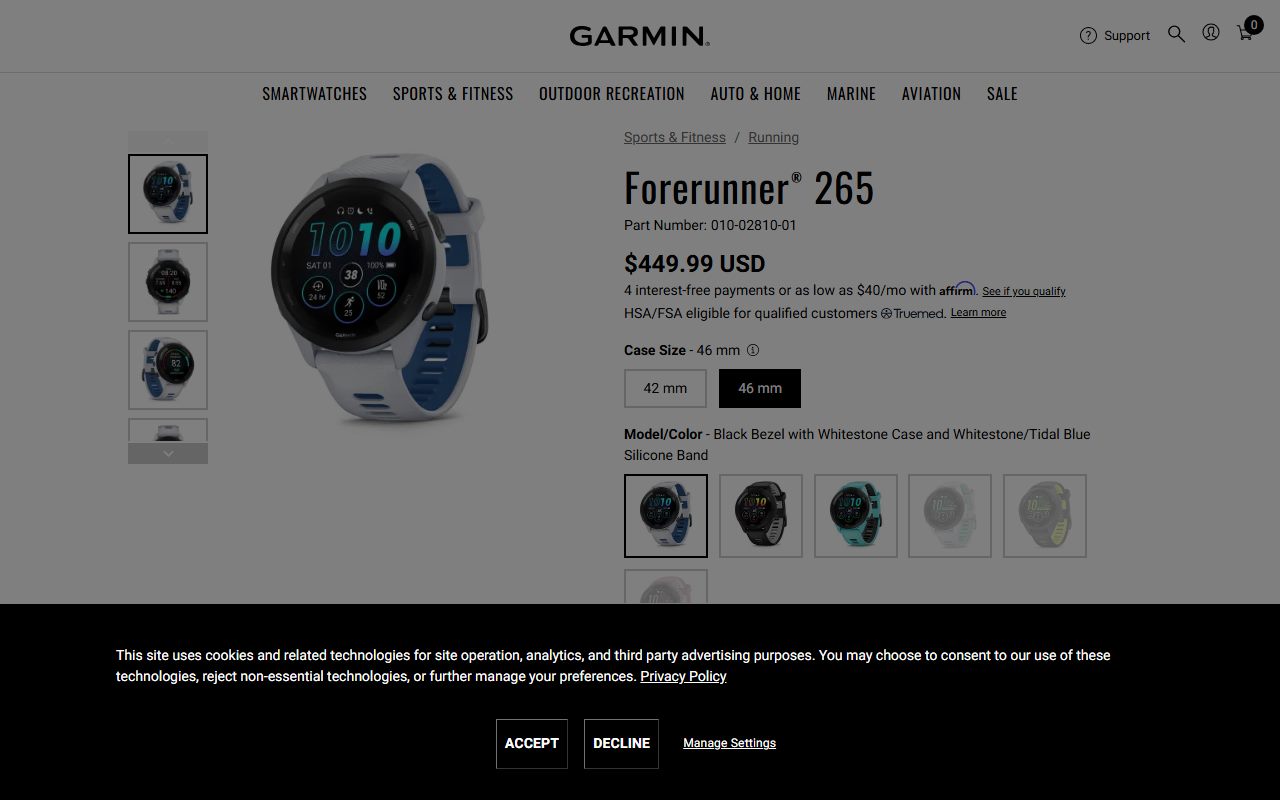
Garmin's blog says you can select Gear in the Garmin Connect menu, add shoes, track their mileage and retire them once they reach their limit. Garmin Connect is the app behind the Garmin Forerunner 265.
COROS' support page for Gear Tracking, read October 21, 2026, goes further. You set a starting mileage and a maximum distance for each pair, choose to be notified when it is reached, and pick which activity modes add the shoes automatically.
COROS lists the Coros Pace 3 among supported watches. On several models including the PACE 3, the watch prompts you to pick a pair at the end of an activity when more than one is set for that mode.
Our Garmin Forerunner 265 vs Coros Pace 3 comparison covers the rest of the two watches' differences.
Rotate pairs and store them out of heat
Three of the four maker pages we read recommend rotation. Brooks says rotating between two or more pairs can help maintain performance and support.
Nike cites a 2015 study in the Scandinavian Journal of Medicine and Science in Sports as finding that rotating pairs can extend shoe life.
COROS' guide cites a 2015 study as showing that alternating running shoes can lead to a 39 percent reduction in injury risk. We have not read the study itself, so we report the figure as COROS states it.
Storage also counts. Brooks says unworn shoes have a shelf life, especially their adhesives, and recommends a cool, dry, ventilated place. Nike advises keeping shoes indoors rather than in a car or on a porch, and stuffing wet shoes with newspaper.
Use the maker's support when a pair fails early
A shoe that wears out well short of the range may be a defect rather than normal wear. Brooks' article says that if shoes wear out before their expected lifespan, Brooks will help, and links to its support options.
Return windows differ by brand, and they are short compared with a shoe's life. Our best watches for new runners guide covers the watches that can log the miles you would need as evidence.
Bottom line
Plan on 300 to 500 miles for a daily trainer, the range Brooks, Nike and COROS publish, with ASICS slightly higher at 400 to 500. Divide that by your weekly mileage to get a date, and use Brooks' 4 to 6 months as a backstop.
Then let the shoe overrule the calendar. A compressed midsole, foam showing through the outsole or a pair that leans on a flat floor means replace now, whatever the log says.
If your trainers also do walking or work duty, expect the end of the range to come sooner.
Sources
- Brooks support: When is it time to replace my shoes? - checked October 21, 2026
- ASICS advice (UK English): Changing your running shoes, knowing when is the right time - checked October 21, 2026
- Nike: How many miles are running shoes good for? - checked October 21, 2026
- COROS: The COROS guide to shoe tracking - checked October 21, 2026
- COROS Help Center: Gear Tracking - checked October 21, 2026
- Garmin blog: Garmin Connect features you should know about (Gear) - checked October 21, 2026